
Master German Fast: 5 Powerful Everyday German Sentences You Must Know 2026. Everyday German sentences explained with meanings, usage tips, and native-style speaking examples to help beginners speak German confidently and naturally.
Table of Contents
Introduction to Everyday German Sentences
Learning everyday German sentences is the fastest and most practical way to start speaking German with confidence. Many learners spend months memorizing grammar rules but still struggle to hold a basic conversation. The reason is simple: real people do not speak like textbooks.
The images you’ve seen highlight a powerful truth—native Germans use short, natural, and context-driven sentences. By focusing on these commonly used phrases, beginners can immediately engage in real conversations at work, while traveling, or in social settings.
This article breaks down five powerful everyday German sentences, explains their meanings, and shows how native speakers actually use them. By the end, you’ll not only understand them—you’ll use them naturally.

Why Learning Native-Style German Matters
Textbook German often sounds correct but unnatural. Native speakers value clarity, efficiency, and tone. When learners adopt native-style German early, they:
- Gain confidence faster
- Avoid awkward phrasing
- Understand spoken German more easily
- Build better personal and professional connections
Everyday German sentences act as conversation bridges. They open discussions, establish rapport, and make communication smooth. That’s why language institutes and fluency coaches emphasize conversational German from day one.
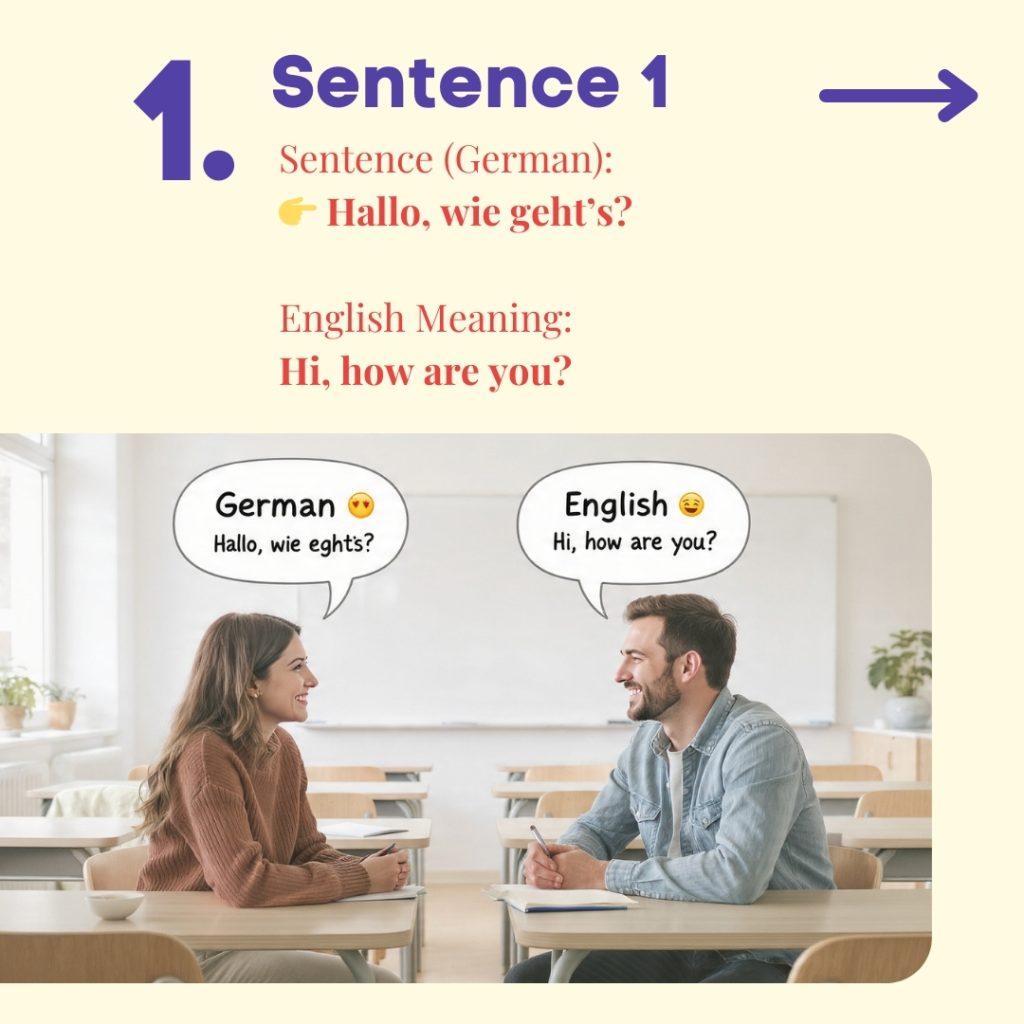
Sentence 1: “Hallo, wie geht’s?”
Meaning and Context
German: Hallo, wie geht’s?
English: Hi, how are you?
This is one of the most common everyday German sentences. It is informal, friendly, and widely accepted in casual conversations.
How Natives Use It
Native speakers often shorten it even more:
- Na, wie geht’s?
- Hallo! Alles gut?
In daily life, Germans may not expect a detailed answer. A simple response works perfectly.
Common Variations
| German Phrase | English Meaning |
|---|---|
| Wie geht es dir? | How are you? |
| Alles klar? | All good? |
| Wie läuft’s? | How’s it going? |
Using these variations makes your German sound more natural and relaxed.
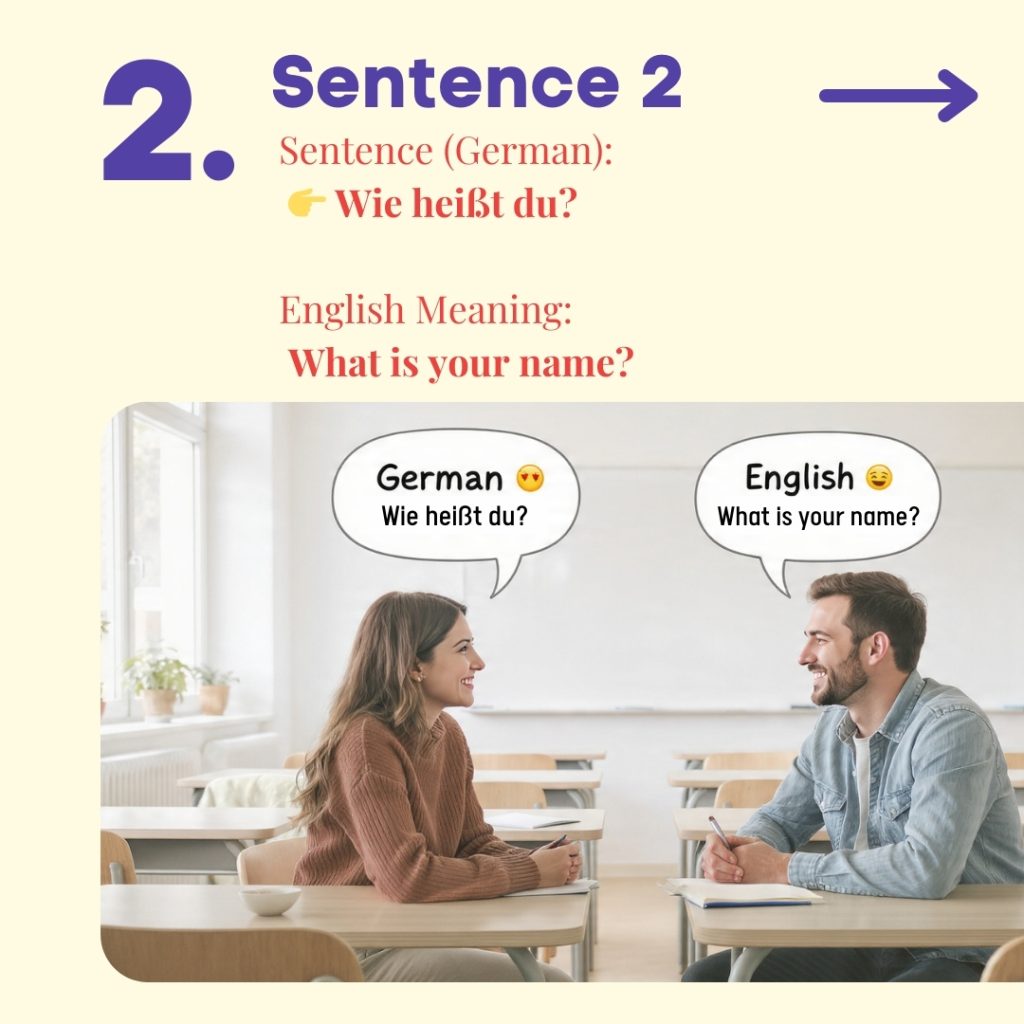
Sentence 2: “Wie heißt du?”
Meaning and Context
German: Wie heißt du?
English: What is your name?
This sentence is used in informal situations such as meeting classmates, colleagues, or new acquaintan
Formal vs Informal Usage
German distinguishes between formal and informal speech.
| Context | Sentence |
|---|---|
| Informal | Wie heißt du? |
| Formal | Wie heißen Sie? |
Understanding this distinction is essential in professional environments.
Practical Examples
- Hallo, wie heißt du?
- Ich heiße Rahul. Und du?
This simple exchange is a foundation of German introductions.
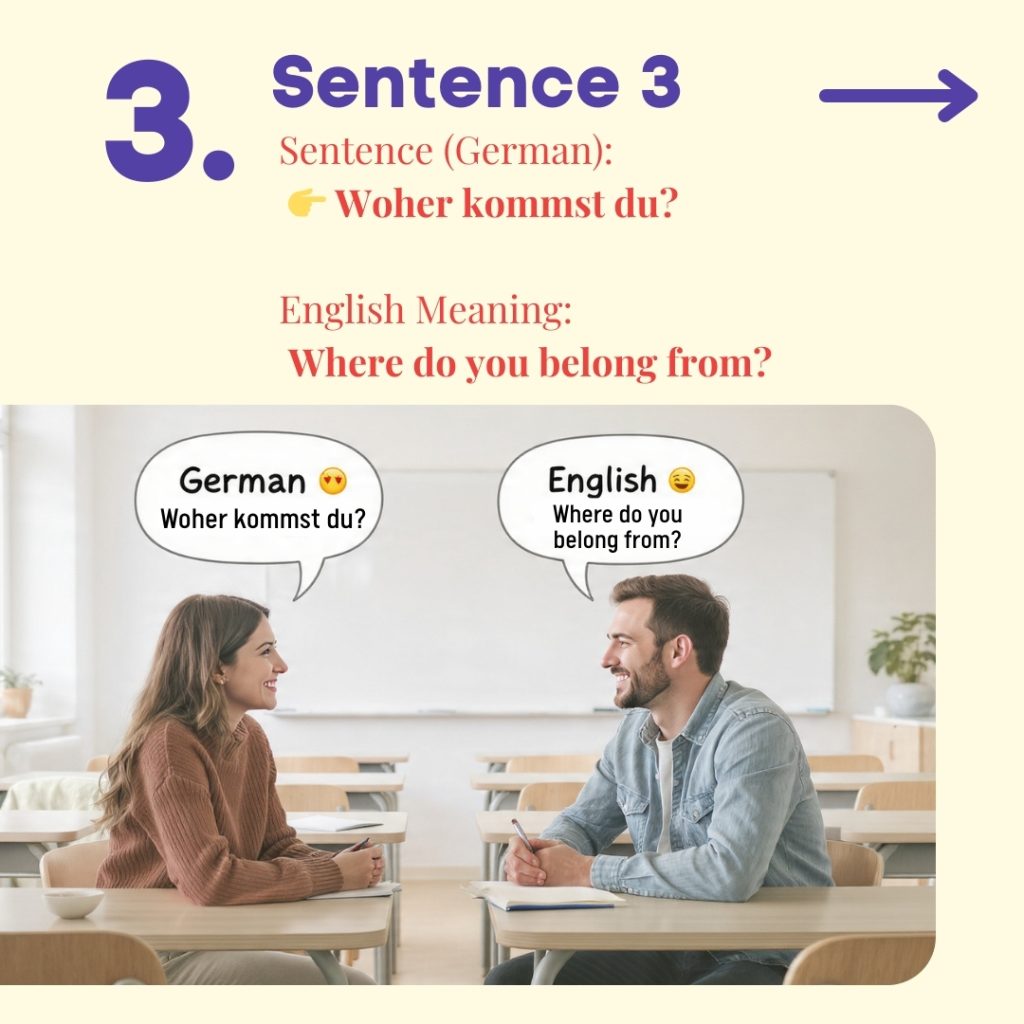
Sentence 3: “Woher kommst du?”
Meaning and Context
German: Woher kommst du?
English: Where are you from?
This sentence is frequently used in social conversations, interviews, and networking situations.
Cultural Relevance
Germans often ask this question to understand cultural background, not to invade privacy. A clear and polite response is expected.
Sample Conversations
- Woher kommst du?
- Ich komme aus Indien.
This sentence helps build personal connections quickly.
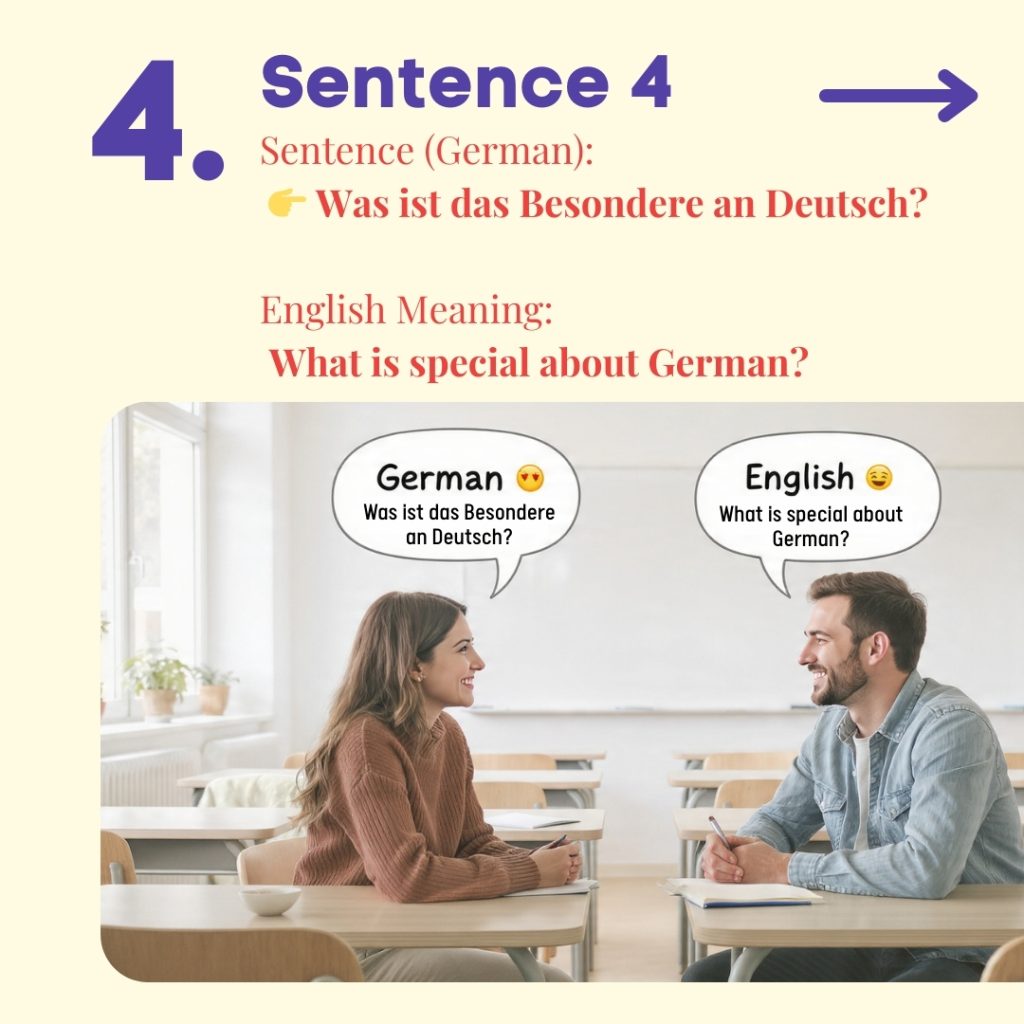
Sentence 4: “Was ist das Besondere an Deutsch?”
Meaning and Context
German: Was ist das Besondere an Deutsch?
English: What is special about German?
This is a reflective and discussion-based sentence, often used in classrooms or cultural conversations.
When to Use This Sentence
- Language learning discussions
- Cultural exchange programs
- Interviews or presentations
It demonstrates curiosity and deeper engagement with the language.
Language Learning Scenarios
Learners often use this sentence to start meaningful conversations about German culture, grammar, or professional relevance.
Stop Speaking Like a Textbook
One key message from the visuals is clear: stop speaking like a textbook. Real German is dynamic, emotional, and contextual. Native speakers often:
- Drop unnecessary words
- Use tone instead of grammar
- Prefer clarity over complexity
By mastering everyday German sentences, learners shift from translation thinking to communication thinking. So Join Aesious Institude Pune
How These German Sentences Improve Fluency
Fluency is not about perfect grammar—it’s about comfort and flow. These everyday German sentences:
- Reduce hesitation
- Improve listening comprehension
- Increase speaking confidence
- Encourage natural responses
Repeated daily usage leads to automatic recall, which is the foundation of fluency.
Common Mistakes Beginners Make
Many learners unintentionally slow their progress by:
- Overthinking grammar
- Translating word-by-word
- Avoiding speaking practice
- Memorizing rare vocabulary
Focusing on everyday German sentences eliminates these barriers.
Tips to Sound Like a Native German Speaker
To sound natural, remember to:
- Use contractions and short phrases
- Match tone and facial expressions
- Practice listening daily
- Speak without fear of mistakes
Consistency matters more than perfection.
Frequently Asked Questions (FAQs)
1. Are everyday German sentences enough for beginners?
Yes. They provide a strong conversational foundation and build confidence quickly.
2. How long does it take to speak basic German?
With daily practice, learners can hold simple conversations within 30–60 days.
3. Is German difficult for Indian learners?
No. With structured guidance and conversational focus, German is highly learnable.
4. Should I focus on grammar first or speaking?
Speaking first. Grammar improves naturally with usage.
5. Can I learn German online effectively?
Yes. Many online platforms now focus on native-style conversational learning.
6. What level do these sentences belong to?
These sentences are ideal for A1 and A2 levels.
Conclusion
Mastering everyday German sentences is the smartest way to start your German learning journey. These phrases help you communicate naturally, build confidence, and sound closer to a native speaker from day one.
Instead of memorizing long grammar rules, focus on how Germans actually speak. Language is not about perfection—it’s about connection. Start small, practice daily, and let fluency follow.
For additional structured learning, you can explore reputable language resources such as Goethe-Institut for cultural and linguistic insights.
German language learning, everyday German sentences, basic German conversation, learn German for beginners, German speaking practice, common German phrases, German daily use sentences, German A1 sentences, German language basics, how to speak German fluently, German conversation examples, native German speaking, German for beginners online, German language course, spoken German practice, German phrases with English meaning, German communication skills,
learn German step by step, German vocabulary for beginners, German sentence examples, German language training, German fluency tips, German speaking without grammar fear, conversational German, practical German language, German language institute, German classes online, German language learning India, German for study abroad, German for jobs, German interview preparation, German cultural communication, stop speaking textbook German, German native expressions, real life German sentences, German speaking confidence, German language tips, German learning for professionals, fast German learning, German speaking skills development

